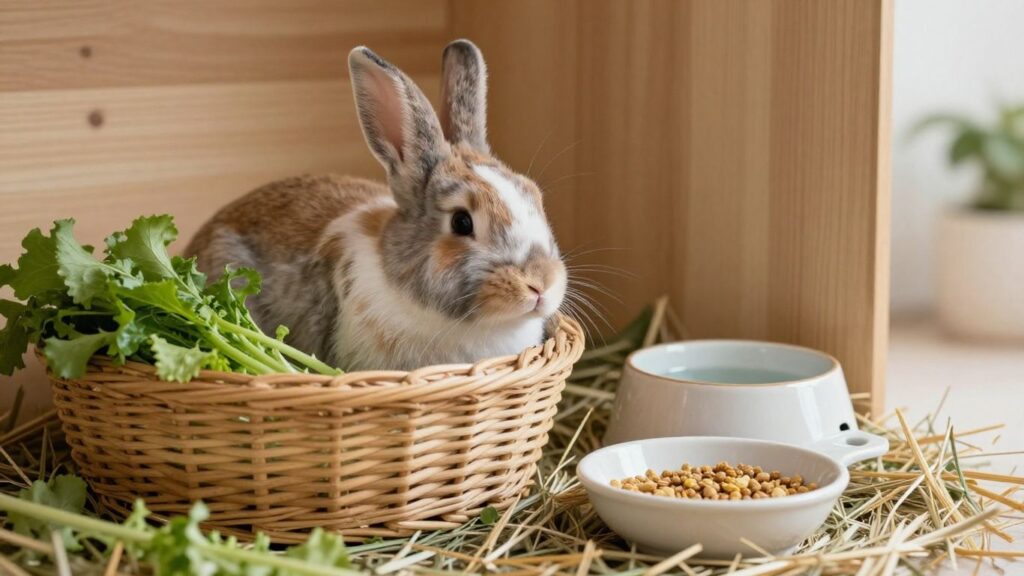
Bunny diet basics: A complete guide to feeding a healthy rabbit
Understanding a rabbit’s natural dietary needs
Our bunny diet basics start with one simple idea: rabbits are grazing herbivores built to eat fibrous plants throughout the day. Hay and grass should form the foundation, while fresh greens, measured pellets and occasional treats add variety. We also need to consider the rabbit in front of us, because age, body condition, activity and health can all affect feeding choices.
Why fiber is the foundation of rabbit nutrition
Fibre helps keep food moving through a rabbit’s digestive system and supports the steady chewing behaviour that grazing animals need. Long strands of hay are especially useful because they provide bulk as well as texture. When we make fibre the largest part of the diet, sweeter and richer foods are less likely to crowd out the essentials.
How the digestive system processes food
A rabbit’s digestive system is suited to frequent meals of plant material rather than large, rich portions. The gut relies on a steady supply of fibre, so a rabbit that suddenly eats less can become unwell. We should pay attention to changes in appetite and droppings, particularly when they happen alongside a diet change.
The role of chewing in dental health
Rabbit teeth continue to grow, and regular chewing helps wear them down naturally. Hay is valuable here because its long, coarse strands encourage a broad chewing motion rather than quick bites. Daily hay matters enormously for this reason, although a rabbit that struggles to chew or eat should be assessed by a rabbit-savvy vet.
How age, size, and health affect dietary needs
A growing rabbit, a healthy adult and an older rabbit do not always need the same balance of foods. Body size helps us judge portions, but weight, activity and body condition matter too. We can use a consistent feeding routine and monitor changes rather than relying on a single rule for every rabbit.
Choosing the right hay and grass
Good hay should be available every day and replaced whenever it becomes soiled or stale. We look for clean, pleasantly grassy hay with a fresh smell, rather than treating it as bedding or an occasional extra. Offering more than one suitable type can help a fussy rabbit stay interested in eating.
The best types of hay for daily feeding
Grass hays such as timothy, orchard, meadow, brome and oat hay are common choices for adult rabbits. They can vary in softness, colour and stem length, so we may need to try a few before finding a favourite. Alfalfa is richer than grass hay and is generally better suited to young or growing rabbits than to routine adult feeding.
How much hay a rabbit should eat
We should provide enough hay for a rabbit to graze freely throughout the day and night. A useful practical check is whether fresh hay is always within reach and whether we are regularly removing the old, trampled portion. If a rabbit ignores hay while eating other foods, we should not simply assume it is being fussy.
When to offer fresh grass safely
Fresh grass can add variety, but it should be introduced gradually if a rabbit has mainly eaten dried hay. We should pick grass from a clean area away from traffic, pesticides, herbicides and dog mess, and never offer lawn clippings because they can heat and ferment quickly. Washing or checking the grass carefully helps us avoid bringing in unwanted plants or contaminants.
Signs that hay quality or availability is inadequate
A rabbit may eat less when hay is dusty, damp, mouldy, extremely coarse or difficult to reach. We can make it more appealing by placing small portions in several clean feeding spots, including near a favourite resting area. The following quick check helps us judge whether the supply is doing its job:
| Hay check | What we want to see | What to do if it falls short |
|---|---|---|
| Smell | Fresh, grassy and clean | Discard musty or mouldy hay |
| Texture | A mix of stems and leaves | Try a different grass hay |
| Access | Available throughout the day | Refill clean, reachable racks or piles |
| Condition | Dry and free from dust | Store it in a dry, ventilated place |
After improving the hay’s quality and placement, we can watch whether normal grazing resumes. Persistent refusal, reduced droppings or a change in eating deserves prompt veterinary attention rather than repeated changes to the food.
Adding fresh vegetables and leafy greens
Fresh greens can provide variety, moisture and useful nutrients alongside hay. We should wash produce, remove spoiled pieces and offer a mix rather than making one vegetable the entire fresh-food portion. As with every part of a rabbit’s diet, the best plan is steady and familiar rather than constantly changing.
Which vegetables are safe for rabbits
Many rabbits enjoy leafy greens such as romaine lettuce, coriander, basil, mint, bok choy and kale in suitable portions. Other options can include capsicum, broccoli leaves and small amounts of firm vegetables such as carrot. We should check any unfamiliar plant before serving it and avoid assuming that food safe for people is automatically suitable for rabbits.
How to introduce new foods gradually
A new vegetable should arrive in a small amount while the rest of the diet stays familiar. We can then observe appetite, droppings and general behaviour before offering more or trying another new food. This slower approach makes it easier to identify which ingredient caused trouble if soft stools or digestive upset appear.
Recommended serving sizes and frequency
Fresh leafy vegetables are usually best offered regularly in modest, varied portions, while richer or sweeter vegetables should remain occasional additions. We can divide the fresh food across the day if that suits the rabbit’s routine and remove anything left to wilt. A simple rotation can keep meals interesting without turning every feeding into an experiment:
- Offer a small selection of washed leafy greens.
- Add one familiar non-leafy vegetable in a modest amount.
- Keep hay available before and after fresh food.
- Remove uneaten produce before it becomes limp or spoiled.
This pattern keeps fresh food in its proper place: useful variety alongside an abundant hay supply. If a rabbit has a sensitive stomach, we can make the rotation even simpler and discuss recurring problems with a vet.
Vegetables and plants to avoid
We should avoid unknown garden plants, treated lawn cuttings, mouldy produce and foods that are high in sugar or starch. Large amounts of carrot, fruit or other sweet vegetables can displace hay and may lead to digestive upset. When we cannot identify a plant with confidence, leaving it out is the safer choice.
Using pellets, treats, and fruit responsibly
Pellets can be convenient, but they should complement hay rather than replace it. We use them as a measured part of the diet, not as a free-choice food, and choose treats that do not encourage a rabbit to ignore its hay. Portion control becomes especially important for indoor rabbits or rabbits that get little exercise.
How to choose a high-quality rabbit pellet
A suitable pellet should be designed for rabbits and provide substantial fibre without being padded with colourful sugary pieces, seeds or dried fruit. We read the label and favour a plain, consistent product rather than a mix that lets the rabbit pick out the richest parts. The right product can still cause problems if we offer too much of it.
How much pellet food to provide
Pellet portions should be guided by the rabbit’s age, size, body condition and the advice of a qualified vet when health is a concern. We can measure the daily amount instead of topping up the bowl whenever it looks empty. If pellets are always available but hay is being ignored, the balance is probably working against us.
When fruit and commercial treats are appropriate
Fruit is best treated as a small, occasional reward because it is sweet and easy to overfeed. We can offer a tiny piece after a calm handling session or use a few suitable herbs as a lower-sugar way to add interest. Commercial treats should be checked for ingredients and kept occasional, especially when they contain cereals, seeds or added sweeteners.
Common signs of overfeeding treats or pellets
A rabbit may start leaving hay untouched, gain excess weight or produce softer droppings when rich foods take up too much of the diet. Some rabbits also become selective, waiting for pellets or treats instead of eating the available grass hay. We can reduce extras gradually, restore a dependable hay routine and seek veterinary guidance if appetite or droppings change significantly.
Providing water and supporting hydration
Clean drinking water should be available at all times, even when a rabbit eats moisture-rich greens. We check the container daily and refresh it whenever it is dirty, slimy or contaminated with hay. A rabbit may drink more in warm weather, after exercise or when eating mostly dry food.
Fresh water requirements for pet rabbits
We should provide water that is fresh, clean and easy to reach. It is useful to check that the container has not frozen, tipped over or become blocked, particularly in outdoor housing. Keeping a second source available can help prevent a rabbit being left without water if one container fails.
Bowls versus bottles for everyday use
A heavy ceramic bowl often allows a more natural drinking position and makes it easy for us to see how much water is available. Bottles can be useful in some enclosures, but their spouts need regular checking because they may clog or develop residue. Some rabbits prefer one option, so we can observe which arrangement encourages reliable drinking while keeping it clean.
Foods that can support hydration
Washed leafy greens contribute moisture, but they should support rather than replace drinking water. We can serve fresh food at room temperature and remove leftovers before they spoil. Hay remains essential even when a rabbit enjoys wet greens, because hydration and fibre serve different roles in the diet.
Warning signs of dehydration
A rabbit that is unusually quiet, reluctant to eat or producing fewer droppings may need prompt veterinary attention. Dry mouth, weakness or a sudden change in drinking can also signal that something is wrong, although these signs have several possible causes. We should not force water into a rabbit’s mouth; instead, we should contact a vet and explain what we have observed.
Avoiding toxic and unhealthy foods
Rabbits are curious and quick to nibble, so safe feeding also depends on managing their surroundings. We keep unfamiliar houseplants, garden chemicals, human snacks and medicines out of reach. A tidy feeding area reduces the chance that a rabbit will sample something unsuitable while exploring.
Foods that can cause digestive problems
Large amounts of sugary fruit, starchy human foods, rich treats and sudden servings of unfamiliar produce can upset a rabbit’s digestion. Mouldy hay or vegetables should never be offered, even if only a small patch appears affected. We keep meals simple when a rabbit is adjusting to a new home or a revised routine.
Plants and household items that may be poisonous
Many ornamental plants cannot be assumed safe for rabbits, and garden clippings may contain chemicals or hidden weeds. Electrical cords, cleaning products, medication and small plastic items are also household hazards rather than foods. We rabbit-proof the enclosure and exercise area before allowing free movement.
Why sudden diet changes are risky
A rabbit’s digestive system benefits from gradual transitions. Replacing hay, pellets or vegetables all at once makes it difficult to tell what caused a problem and may reduce eating. We change one element at a time, retain familiar foods during the transition and watch appetite and droppings closely.
What to do after a rabbit eats something unsafe
We remove the suspected item, keep the packaging or plant sample if it is available, and contact a rabbit-savvy vet promptly for tailored guidance. We should not wait for severe signs or attempt home remedies without professional direction. While waiting for advice, we note what was eaten, how much may be missing and when the rabbit consumed it.
Adjusting the diet throughout a rabbit’s life
A sound feeding routine changes as a rabbit grows, ages or develops a different body condition. We make adjustments gradually and keep hay, water and careful observation at the centre of the plan. Regular weight checks can help us notice trends before a small change becomes difficult to manage.
Feeding young rabbits during growth
Young rabbits need food that supports growth, and their requirements differ from those of mature adults. Alfalfa hay or an appropriate young-rabbit pellet may be used in some feeding plans, while grass hay can still help establish good grazing habits. We follow age-specific guidance from a vet or reputable rabbit-care professional rather than switching foods abruptly.
Nutritional needs of healthy adult rabbits
For a healthy adult, unlimited suitable hay, clean water and a varied but measured selection of fresh greens usually form the core routine. Pellets remain a controlled supplement, while fruit and commercial treats stay occasional. We adjust portions if body condition changes, rather than rewarding a rabbit with extra food simply because it asks.
Supporting senior rabbits
Older rabbits may chew less effectively, move less or find it harder to maintain weight. Softer hay, easy access to food and closer observation can help, but a new reluctance to eat should not be dismissed as normal ageing. Dental, mobility and other health concerns need an individual plan from a vet.
Dietary considerations for overweight or ill rabbits
For an overweight rabbit, we usually review pellet and treat portions first while protecting access to hay and suitable greens. Illness, dental discomfort or reduced appetite can change dietary needs quickly, so we should not impose a restrictive plan without veterinary guidance. We track food intake, droppings, weight and behaviour so that any professional advice is based on clear observations.
Conclusion
When we build meals around plentiful hay, clean water and suitable fresh greens, then keep pellets and treats measured, rabbit feeding becomes much easier to manage. We introduce changes slowly, protect rabbits from unsafe plants and foods, and respond promptly when appetite or droppings change. A calm routine and regular observation give us the best foundation for supporting a healthy rabbit throughout its life.