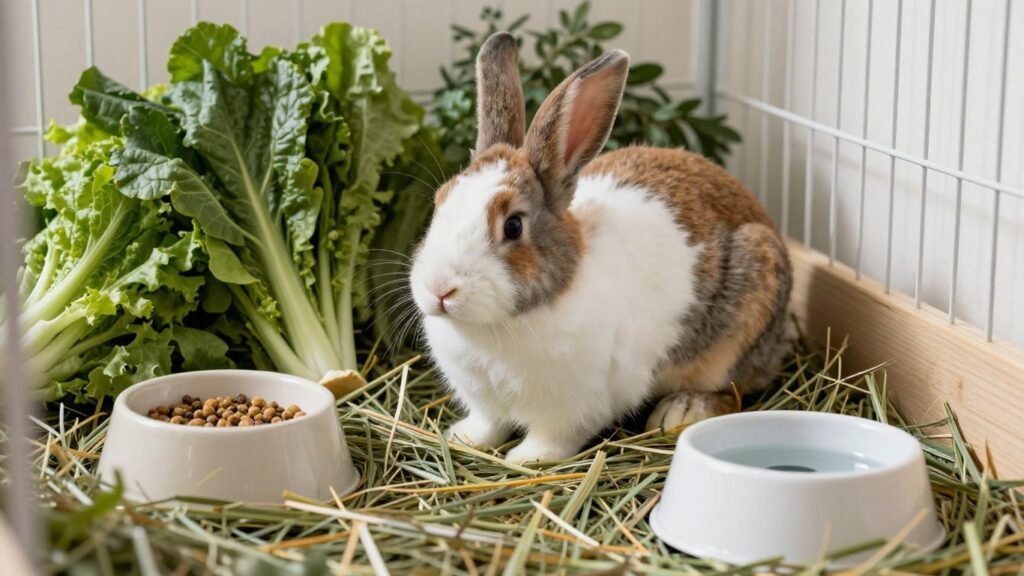
Bunny diet basics: A complete guide to feeding your rabbit safely
Understanding a rabbit’s nutritional needs
Good bunny diet basics begin with understanding that rabbits are grazing animals with delicate, highly specialised digestion. Their meals should be built around fibre, with fresh water always available and smaller amounts of greens and pellets added thoughtfully. We find that a simple, consistent diet is usually easier to manage than a varied menu full of treats.
Why fiber is the foundation of a healthy diet
Fibre keeps food moving through the digestive tract and encourages the steady chewing rabbits need. Long strands of hay also help wear down teeth, which grow continuously. When hay is pushed aside for richer foods, rabbits may eat fewer calories overall but still miss the roughage their bodies rely on, so fibre comes first in nearly every feeding plan.
A rabbit should be able to nibble hay throughout the day and night. We treat leafy greens and pellets as additions to that foundation rather than replacements for it.
How a rabbit’s digestive system works
A rabbit’s digestive system depends on regular movement of food and the fermentation of fibre in the hindgut. Rabbits also produce soft, nutrient-rich droppings called caecotrophs, which they normally eat directly. This is a normal part of digestion, not a sign that the rabbit is unwell.
Sudden changes can upset this finely balanced process. A rabbit that stops eating, produces very few droppings, or becomes unusually quiet needs prompt attention from a veterinarian, because digestive problems can become serious quickly.
The role of hay, greens, pellets, and water
Hay provides the bulk of daily fibre, while suitable leafy greens add moisture, variety, and nutrients. Pellets can supply concentrated nutrition in measured portions, but they should not crowd out hay. Clean water supports digestion and general health, whether it is offered in a heavy bowl, a bottle, or both.
We check that every part of the diet has a clear purpose rather than adding foods simply because a rabbit enjoys them. Carrots, fruit, and commercial treats belong in the occasional category, not at the centre of a meal.
Nutritional needs by age and life stage
Young rabbits, adults, older rabbits, and nursing mothers may not need identical diets. Growing rabbits generally have different energy and mineral needs from healthy adults, while an older or unwell rabbit may need an individual plan from a rabbit-experienced veterinarian.
We avoid making abrupt age-based changes. Instead, we consider body condition, activity, dental health, and droppings, then adjust gradually with professional guidance when necessary.
Choosing the right hay and grass
Hay is the most dependable everyday food for most pet rabbits, so its quality and availability matter. We offer it in more than one easy-to-reach place, including near a rabbit’s usual resting or toileting area. Fresh grass can also be useful, but it must be introduced with the same care as any new food.
Best types of hay for daily feeding
Grass hays such as timothy, orchard, meadow, brome, and oat hay are common choices for adult rabbits. We may rotate suitable varieties to keep meals interesting, provided each type is fresh and well tolerated. Alfalfa is richer than most grass hays and is generally better suited to young, growing rabbits or specific life stages rather than unrestricted adult feeding.
The best hay is clean, dry, sweet-smelling, and free from mould. Very coarse hay is not automatically better; texture should suit the individual rabbit, especially if dental problems make chewing difficult.
How much hay a rabbit should eat
We keep hay available at all times rather than serving one large ration and removing it later. A healthy rabbit should spend a meaningful part of the day grazing, with fresh hay topped up whenever it becomes soiled or stale.
A rabbit that suddenly leaves its hay may be telling us something about appetite, teeth, pain, or another health issue. Before simply offering tastier alternatives, we check eating, drinking, droppings, and behaviour.
When to introduce fresh grass safely
Fresh grass can be offered after a rabbit is already eating reliably, but a rabbit that has only eaten indoor hay should not be placed straight onto a large patch. We begin with a small amount of clean, untreated grass and increase it slowly over several days while watching droppings and appetite.
Grass clippings are unsafe because they can heat and ferment quickly. We also avoid areas treated with weedkillers, fertiliser, or other chemicals, and we check that the grass is free from toxic plants.
Signs that hay quality may be poor
Dusty, damp, mouldy, or musty hay should not be fed. A faded bale with lots of broken fragments may be less appealing, although rabbits can still accept different textures depending on preference. We store hay somewhere dry and well ventilated rather than sealed while it is still warm.
When a rabbit refuses a particular batch, we compare its smell and texture with a fresh sample. If hay is repeatedly rejected despite being good quality, the issue may be dental or medical rather than fussiness.
Adding leafy greens and fresh vegetables
Fresh foods can make meals more interesting, but variety should not become a race to offer every vegetable at once. We wash produce, remove spoiled pieces, and serve modest portions that complement an unlimited hay supply. Each rabbit has individual tolerances, so we let the animal’s droppings and appetite guide the pace.
Safe leafy greens for regular meals
Suitable greens may include romaine lettuce, coriander, parsley, basil, mint, bok choy, and spring greens, provided they are fresh and well tolerated. We offer a mixture rather than relying on one plant every day, and we take care with very rich or strongly flavoured greens.
Leafy foods should be introduced one at a time when a rabbit is new to fresh produce. A small serving gives us a clearer idea of how that particular rabbit responds before we build it into a regular rotation.
Vegetables to serve in smaller portions
Non-leafy vegetables such as capsicum, cucumber, broccoli, and carrot can be offered in smaller amounts. Carrot is sweet, so we treat it as a tasty extra rather than assuming its popularity makes it a staple. Washed vegetables are preferable to pre-seasoned, cooked, or packaged human foods.
The following approach helps us keep fresh meals balanced without overcomplicating them:
- Make leafy greens the main fresh-food portion.
- Add one small non-leafy vegetable when the rabbit tolerates it.
- Remove uneaten fresh food before it wilts or spoils.
- Reduce extras if hay intake begins to fall.
This keeps vegetables in their proper role. The list is not a substitute for observing the rabbit, because a portion suitable for one animal may be too much for another.
How to introduce new foods gradually
We introduce one new food at a time and start with a small piece or serving. For the next day or two, we look for changes in droppings, appetite, energy, and behaviour before increasing the amount. This slower method can feel cautious, but it makes it much easier to identify the cause of a problem.
If a food appears to cause soft stools or discomfort, we stop offering it and return to familiar hay and water while monitoring closely. We do not keep testing the same food simply because it is considered safe for rabbits generally.
Recognizing digestive problems after dietary changes
Soft stools, diarrhoea, bloating, reduced appetite, or fewer droppings are warning signs after a dietary change. A messy bottom can also indicate that the diet is too rich or that the rabbit cannot groom properly because of pain, illness, or excess weight.
We take a rabbit that stops eating seriously. Digestive symptoms that persist, worsen, or occur with lethargy or pain should be discussed promptly with a veterinarian rather than managed with further food experiments.
Selecting pellets and healthy treats
Pellets are concentrated food, so a bowl that is constantly full can encourage selective eating and excess weight. We choose a plain, high-fibre pellet made for rabbits and measure the daily amount instead of topping up by habit. Treats are kept small enough that they do not displace hay or fresh greens.
What to look for in a quality rabbit pellet
We look for a pellet with grass hay or another suitable fibre source high on the ingredient list, without colourful pieces, seeds, nuts, or sweetened additions. A uniform pellet makes selective feeding less likely than a mixed muesli-style food. Packaging should provide clear feeding guidance and a use-by date.
No pellet can compensate for poor hay intake. We use pellets as a measured part of the diet and pay attention to whether the rabbit is still grazing normally.
How pellet portions should vary by rabbit
Pellet portions should reflect a rabbit’s age, size, body condition, activity, and health rather than a single rule for every animal. Growing rabbits and nursing mothers may require different support from adult rabbits, while an overweight or sedentary rabbit may need careful reduction under professional guidance.
We measure portions with the same cup or scoop and reassess regularly. A rabbit that is gaining weight, leaving hay, or producing very soft droppings may be receiving too many concentrated foods.
Fruits and other treats to offer occasionally
Small pieces of apple without seeds, berries, or banana can be occasional treats for a rabbit that already has a stable diet. We offer only a little and avoid turning treats into a way of persuading a rabbit to ignore hay. Fresh herbs can also be used as a modest enrichment food when tolerated.
Treats work best when they are predictable and infrequent. We prefer offering a small piece by hand or hiding a little among hay rather than filling a bowl with extras.
Ingredients and treats to avoid
We avoid foods containing chocolate, dairy, meat, added sugar, or heavily processed starches. Seed sticks, yoghurt drops, biscuits, and brightly coloured mixes may be marketed for small pets but are not suitable foundations for a rabbit’s diet.
A treat is not made healthy by being sold in a pet shop. We read the ingredient panel, keep packaging away from the enclosure, and choose hay or rabbit-safe herbs when we want to provide enrichment without unnecessary richness.
Foods that can harm rabbits
Some foods are unsafe because they are toxic, difficult to digest, or too rich for regular feeding. Others become risky through preparation, contamination, or an unknown ingredient. We keep a short list of safe foods and avoid relying on a rabbit’s willingness to eat something as proof that it is suitable.
Toxic plants and dangerous human foods
Rabbits should not be allowed to nibble unknown garden plants, lawn clippings, bulbs, or houseplants. Human foods such as chocolate, onion, garlic, avocado, and highly seasoned meals are not appropriate for them. We identify plants before bringing cuttings, flowers, or garden weeds into an enclosure.
A secure run and careful supervision reduce the chance of accidental grazing. When we are unsure about a plant or food, we leave it out rather than taking a chance.
Why sugary and starchy foods cause problems
Sugary and starchy foods can upset the balance of the hindgut and may encourage weight gain when offered frequently. Sweet fruit, cereal, bread, crackers, and large amounts of root vegetables are easy to overfeed because rabbits often enjoy them.
We keep these foods out of everyday meals and make hay the first option when a rabbit begs. A rabbit’s enthusiasm is useful information about preference, not a measure of nutritional value.
Unsafe processed treats and commercial mixes
Mixed foods allow rabbits to pick out seeds, dried fruit, and colourful pieces while leaving the less appealing ingredients behind. Sticky treats can also be difficult to portion and may contain ingredients that are unsuitable for rabbits. We favour simple, clearly labelled products over novelty snacks.
The same caution applies to homemade treats. A recipe made for people or another species may contain ingredients that a rabbit should not eat, even when the portion looks tiny.
What to do if a rabbit eats something harmful
If a rabbit eats a potentially toxic plant, medication, chemical, or unsuitable food, we remove access and record what was eaten, how much may be missing, and when it happened. We contact a veterinarian or an animal poison service promptly for specific advice, keeping the packaging or plant sample available if it can be done safely.
We do not try to make a rabbit vomit, give home remedies, or wait for symptoms before asking for help. Urgent signs include difficulty breathing, collapse, severe weakness, seizures, pain, or refusal to eat.
Managing feeding routines and monitoring health
A steady routine helps us notice changes early. We serve food at roughly consistent times, refresh hay before it runs out, and inspect the enclosure rather than relying on a rabbit’s appearance alone. Diet management is an ongoing habit, not a one-time choice of products.
Creating a consistent daily feeding schedule
We begin and end the day by checking hay and water, then provide measured pellets and an appropriate serving of fresh greens. Treats are offered only occasionally, preferably after the rabbit has eaten its normal foods. Any change is made gradually so that the digestive system has time to adjust.
A routine also makes shared care easier. If more than one person feeds the rabbit, we use a simple record so that pellets and treats are not accidentally given twice.
Providing clean water and suitable feeding equipment
Fresh water should be available at all times and changed regularly. Heavy ceramic bowls are less likely to tip, while bottles can be useful if they are checked for blockages; some rabbits use both. We wash bowls, bottles, hay racks, and feeding areas often enough to prevent slime, stale food, and contamination.
We place hay where the rabbit can reach it easily and avoid equipment with sharp edges or awkward openings. Enrichment feeders can encourage natural foraging, but they should never make essential food difficult to access.
Tracking weight, appetite, and droppings
We watch body shape, appetite, energy, and droppings together rather than focusing on weight alone. Regular weighing with a safe, consistent method can reveal a gradual change that is difficult to see by eye. We also note whether the rabbit is eating hay, producing normal droppings, and grooming as usual.
A brief household record can include these practical checks:
- Approximate weight and body condition.
- Hay, greens, pellets, and treats eaten.
- Number and appearance of droppings.
- Changes in posture, energy, or grooming.
These observations give us useful information to share with a veterinarian. They also help distinguish a brief preference from a genuine change in health.
When diet-related symptoms require veterinary care
We seek veterinary help promptly if a rabbit stops eating, produces markedly fewer droppings, has persistent diarrhoea, shows abdominal pain, becomes lethargic, or loses weight without explanation. Dental disease, gut problems, pain, and other illnesses can all look like fussiness around food.
We do not diagnose from a feeding chart or try to correct serious symptoms by adding treats. A rabbit-experienced veterinarian can assess the animal and advise on an appropriate diet for its particular age, condition, and needs.
Conclusion
The safest rabbit diet is usually straightforward: plentiful, good-quality hay, clean water, suitable greens, measured pellets, and very occasional treats. We introduce changes slowly, keep unsafe foods out of reach, and treat shifts in appetite or droppings as useful health signals. With a calm routine and careful observation, we can make bunny diet basics part of everyday rabbit care rather than a source of guesswork.