Bunny diet basics: A practical guide to feeding your rabbit
Understand the foundations of a healthy rabbit diet
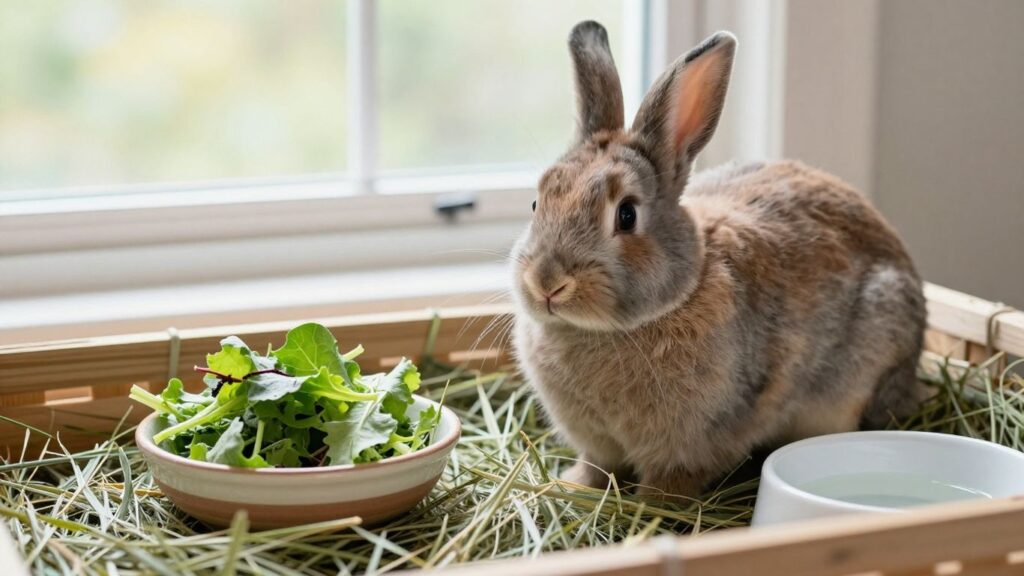
When we get to know what rabbits eat naturally, their daily menu starts to make more sense. A useful approach to bunny diet basics is to make grass hay the mainstay, then add suitable leafy greens, a modest amount of plain pellets and constant access to water. The right balance can vary with a rabbit’s age, health and body condition, so we treat general guidance as a starting point rather than a fixed prescription.
Why fiber is essential for digestion and dental health
Rabbits need plenty of fibre, and long-stem hay is a practical way to provide it. Chewing hay supports normal tooth wear, while fibre helps keep food moving through the digestive system. We make sure hay is available throughout the day rather than offering it as an occasional extra, because steady access to hay is central to a sensible routine.
The role of leafy greens, pellets, and fresh water
Leafy greens add variety and contribute nutrients, while plain rabbit pellets can complement the rest of the diet. Neither should displace the hay that forms its foundation. Fresh water should always be available, and we check that a rabbit can reach it easily and that its water source is clean.
How a rabbit’s needs differ from a cat’s or dog’s
Rabbits are herbivores, so their everyday feeding pattern centres on plant foods and fibre rather than meat or a bowl of animal-based food. A rabbit’s needs are also shaped by its specialised digestion, making sudden dietary changes a poor fit for routine feeding. We avoid assuming that advice for cats or dogs transfers directly to rabbits; their food choices and feeding habits need their own approach.
Choose and serve the right hay
Hay is the part of a rabbit’s diet we want to keep available and appealing every day. Most healthy adult rabbits are offered grass hay, with the specific variety often chosen according to availability and the rabbit’s willingness to eat it. Texture and scent can differ, so trying a suitable alternative may help when a rabbit turns away from one type.
Compare grass hay varieties such as timothy, orchard, and oat
Timothy, orchard and oat are commonly used grass hays, and each can offer a slightly different texture or aroma. Rabbits have individual preferences, so we can observe what our rabbit eats readily rather than assuming one variety will suit every animal. This quick comparison can help us choose what to try:
| Hay variety | What it may be like | A practical consideration |
|---|---|---|
| Timothy | A familiar grass hay with a coarse texture | A common everyday option for adult rabbits |
| Orchard | Often softer and finer in texture | Worth trying for a rabbit that prefers softer hay |
| Oat | May include seed heads and a different texture | Check that it is clean, dry and fresh |
These are broad descriptions, not a ranking of nutritional quality. We can offer a suitable grass hay and pay attention to whether our rabbit is actually eating it; a change in preference may call for a closer look at freshness or health.
When alfalfa hay is appropriate
Alfalfa is a legume hay rather than a grass hay, and it is richer than typical grass hays. It may be suitable for growing rabbits or rabbits with particular life-stage needs, but it is not automatically the right everyday choice for a healthy adult. We ask a rabbit-savvy veterinarian for guidance when age, pregnancy, nursing or health concerns make the choice less straightforward.
Keep hay fresh, accessible, and appealing
Clean, dry hay is more inviting than hay that has become damp, dusty or stale. We keep it somewhere easy to reach, replenish it often, and avoid letting it sit in a soiled area. If a rabbit suddenly eats much less hay than usual, we note the change rather than simply switching foods and assuming the problem is solved.
Introduce leafy greens safely
Leafy greens can bring welcome variety to a rabbit’s meals, but we introduce them thoughtfully. Choose produce known to be suitable for rabbits and keep the quantity appropriate for the individual animal. If we are unsure whether a particular green is suitable, we check with a rabbit-savvy veterinarian before offering it.
Select rabbit-safe leafy vegetables
Examples of leafy options commonly offered to rabbits include romaine lettuce, coriander, basil, dill and bok choy. A rabbit may enjoy some more than others, and not every green suits every animal. We focus on plain leaves rather than dressings or seasoning, and we avoid making one favourite vegetable the whole fresh-food selection.
Wash produce and offer a varied rotation
We rinse greens under clean water and remove damaged or spoiled leaves before serving them. A modest rotation of suitable vegetables gives us variety without turning each meal into a completely new combination. We also keep track of what we offer, which makes it easier to notice if a particular food seems to coincide with a change in droppings or appetite.
Add new greens gradually and watch for digestive changes
When a food is unfamiliar, we add it gradually and avoid introducing several new items at once. That way, if the rabbit’s droppings or appetite changes, we have a clearer idea of what was recently added. We pause the new item and seek veterinary guidance if we notice a concerning change, rather than repeatedly testing foods to see what happens.
Portion pellets and treats appropriately
Pellets and treats are easy to overdo because they are convenient and often eagerly eaten. We use pellets as a measured complement to hay and greens, not as the main event, and keep treats occasional. A rabbit’s appropriate portions depend on factors such as age, size and body condition, so there is no single amount that fits every animal.
Choose plain, high-fiber rabbit pellets
We look for pellets made for rabbits that are plain and high in fibre, rather than mixes containing colourful pieces, seeds or dried sweet additions. A uniform pellet makes it easier to offer a consistent food without encouraging selective eating. We follow the product’s feeding guidance as a starting point and ask a veterinarian about individual needs.
Adjust pellet portions for age, size, and body condition
The right portion can differ between a growing rabbit and an adult, and it may also need review as body condition changes. We pay attention to the whole diet, including how much hay and fresh food the rabbit eats, instead of judging pellets in isolation. If we are unsure whether a rabbit is at a healthy weight or how much to offer, a rabbit-savvy veterinarian can help assess its needs.
Keep fruit and commercial treats limited
Fruit and packaged treats can be appealing, but their sweetness or richness makes them better as occasional extras than daily staples. We keep portions small and check ingredients, avoiding products with added sugars or ingredients not intended for rabbits. If a treat starts to crowd out hay or greens, we scale back and return to the usual routine.
Avoid foods that can harm rabbits
A curious rabbit may sniff or nibble foods left within reach, so safe storage matters as much as careful serving. We keep the menu simple and stick to foods we know are suitable for rabbits. When a food is unfamiliar or its ingredients are unclear, we leave it out until we have checked reliable, rabbit-specific guidance.
Recognize foods that may cause illness or digestive problems
Some foods are not appropriate for rabbits, and others may cause digestive upset, especially when introduced suddenly or offered in excess. We keep common hazards in mind when preparing food or tidying a shared space:
- Chocolate and other cocoa-containing foods
- Avocado
- Onion and garlic
- Rhubarb
This is not a complete list of every possible hazard. We store these foods securely and contact a veterinarian or animal poison advice service if we think a rabbit has eaten something unsafe.
Skip sugary, salty, and highly processed human foods
Biscuits, crisps, sweetened cereals and seasoned leftovers are not suitable rabbit treats. Their salt, sugar, fats or additives can make them a poor fit for a rabbit’s diet, even if the rabbit seems keen to try them. We keep human snacks out of reach and offer rabbit-appropriate foods instead.
Check questionable foods with a rabbit-savvy veterinarian
Online food lists can differ in detail, and a food’s suitability may depend on its preparation or the rabbit’s health. When we cannot confirm that an item is safe, we do not experiment by offering a small taste. A veterinarian familiar with rabbits can help us check the question in the context of that animal’s diet.
Adapt feeding to age and health
A rabbit’s needs can shift over its lifetime, so a routine that once worked may need review. Young rabbits, adults and seniors do not necessarily need identical feeding plans. We make changes with care and seek professional input when age or health makes the right choice uncertain.
Adjust the diet for young, adult, and senior rabbits
Growing rabbits may have different nutritional needs from healthy adults, while older rabbits can develop preferences or health issues that affect what they eat. We do not assume that a food suitable for one life stage is right for another. A rabbit-savvy veterinarian can help us review the diet as the rabbit grows older or its condition changes.
Consider special needs during pregnancy or illness
Pregnancy, nursing and illness can change a rabbit’s nutritional needs, and the right feeding approach depends on the individual situation. We avoid making major diet changes based on guesswork, particularly when a rabbit is unwell or recovering. Instead, we discuss suitable foods and feeding adjustments with a veterinarian familiar with rabbits.
Change foods gradually and seek veterinary advice for appetite changes
We introduce new foods in small steps and keep the rest of the routine steady while the rabbit adjusts. If a rabbit eats noticeably less, refuses food or has a sudden change in droppings, we contact a veterinarian promptly. Rabbits can become unwell when eating patterns change, so we do not wait to see whether a persistent appetite change resolves on its own.
Monitor eating habits and overall health
Daily observation helps us notice small changes before they become easy to miss. We watch what the rabbit eats, check that its droppings look typical for it, and keep an eye on body condition over time. Patterns matter more than a single quiet meal, but a marked or ongoing change deserves attention.
Track appetite, droppings, weight, and body condition
A simple record can help us spot a gradual shift in appetite, droppings or weight. We can note which foods are offered and whether the rabbit is eating its usual amount, while checking body condition gently and consistently. If something changes, those observations give us useful details to share with a veterinarian.
Make sure fresh water is always available
We provide fresh water every day and check that the bowl or bottle is clean and working. Some rabbits prefer a bowl, others use a bottle, and what matters is reliable access to water. We also notice whether drinking habits change, since that information can help us describe the rabbit’s routine accurately.
Know when a change in eating or droppings needs prompt care
A rabbit that stops eating, eats much less than usual, or produces markedly fewer or different droppings needs prompt veterinary attention. We do not try to treat a sudden change by making multiple food adjustments at home. When in doubt, we contact a rabbit-savvy veterinarian and describe what has changed and when we first noticed it.
Conclusion
A steady rabbit diet is built around suitable hay, thoughtfully offered greens, measured pellets, limited treats and fresh water. When we choose foods carefully, make changes gradually and keep an eye on appetite and droppings, it becomes easier to notice what suits our rabbit. For individual questions or sudden changes, a rabbit-savvy veterinarian is the right person to help guide the next step.